The Surprising Reason Your SEO Headlines Are Tanking on Social Media — And How to Fix It Fast
You’ve done the work.
You’ve researched the keywords. You’ve checked the search volume. You’ve crafted a clear, descriptive title that aligns with what Google is already showing in SERPs.
It ranks. It gets impressions. Maybe even a steady stream of search traffic.
Then you share the same post on social media…
…and nothing happens. Crickets.
Here’s the uncomfortable truth:
The headline that helps you rank in Google is often the same headline that kills your social traffic.
Not because it’s bad writing. Not because the content isn’t useful. But because SEO titles and social titles exist in completely different environments.
Search engines reward clarity and relevance. Social media rewards curiosity and disruption.
If you use the exact same headline for both, you’re essentially trying to sell a roller coaster by reading people the safety manual.
The mistake most bloggers make (me included)
Most bloggers assume a post can only have one title. Despite OpenGraph being a thing. We’ll get onto that in a moment.
Anyway…
So they spend time optimizing something like: How to Improve Page Speed on WordPress.
It contains the keyword, it’s clear about the topic, and it’s exactly what someone searching Google wants to see.
But then that exact headline gets posted on social media alongside memes, trending topics, and heated political arguments.
In that environment, a clean and sensible headline simply disappears.
Not because the content isn’t valuable.
Because the headline wasn’t designed for that context.
Search and social operate on entirely different psychological rules.
Once you understand that difference, it becomes obvious why so many blog posts perform well in search but completely flop on social media.
The psychology of the scroll
To understand why this happens, you need to think about the mindset of the person seeing your headline.
The key difference is intent.
Think of Google users as hunters. When someone searches on Google, they’re looking for a solution and they want an answer fast.
They could be trying to figure out why their AirPods Max keep cutting out, how to start a blog, why their website traffic dropped, or find their way out of a cave in Everspace 2 because the game is glitched.
You get the picture, right? They’re looking for an answer.
In this environment, clarity wins. Always.
The best headlines tend to be straightforward and predictable:
- How To Start A Blog (Step-By-Step Guide)
- How To Fix Mono Audio In DaVinci Resolve
- Why Your Website Traffic Dropped (And How to Fix It)
These headlines work because they match the user’s intent perfectly.
But that same approach completely fails on social media.
Why? Social media users are spectators. They don’t open their favourite social media platforms to solve problems.
They’re there to procrastinate. Or to build an audience as is the case with some creators.
But mostly procrastinate.
Your post is competing with:
- Memes
- Viral threads
- Celebrity drama
- Outrage posts
- Vacation photos
- Trending news
In other words, it’s chaos. Pure chaos.
Your carefully optimized title like “How To Improve Your Blog’s Page Speed” is suddenly competing with things like “This AI generated cat just wrote a better song than I did.”
Guess which one wins the click?
Exactly.
Whether people actually like the AI generated cat song is another matter entirely. A lot of AI generated content may have a lot of comments but it’s mostly people raging against AI.
Oh, the irony. Anti-AI folks leaving scorching comments on AI-generated content in protest when all it does is tell the algo to push it to more people.
Anyway, I digress.
The point I’m making here is that while social media can be used as a search engine, it’s mostly used for doom scrolling.
It’s an attention economy.
If your headline (or content in general) doesn’t interrupt someone’s scrolling pattern, nobody will ever see it.
That’s why bloggers who rely on SEO-style headlines are missing out on so much more social media traffic than they realize.
But here’s the good news: you don’t have to choose between SEO and social.
The ghost title strategy
Most bloggers believe they’re stuck with a single headline because they don’t want to risk hurting their search rankings.
That’s a valid concern. Changing a title that already ranks can absolutely affect performance in Google.
But here’s what many bloggers don’t realize:
Your blog post doesn’t actually have to have just one title.
You can have two:
- An SEO title designed for search engines.
- A social title designed to attract clicks on social platforms.
Your real title stays exactly the same for Google. But social media platforms pull a completely different headline from your metadata.
Google sees the optimized version.
Social media sees the scroll-stopping version.
Two different headlines. Same post.
I’m calling this the ghost title strategy. Because it sounds cooler than whatever other sub-heading I could have used for this section.
Why this works (and most bloggers miss it)
When someone shares a link on platforms like X, Facebook, or LinkedIn, those platforms don’t simply grab the page title.
Instead, they look for special metadata called OpenGraph tags.
These tags tell the platform three things that should appear in the preview card:
- The title
- The description
- The image
If you don’t define these tags yourself, the platform defaults to using your page title, and featured image, etc.
Now, this is easy to miss because in WordPress, you won’t see any OpenGraph options unless you have a special plugin installed. It usually comes bundled with social sharing plugins or SEO plugins. SEO plugins.
Let’s talk about them now so you can see how easy it can be with the right tool(s) for the job.
The tools that make this easy
You don’t need custom code to implement this. Plenty of WordPress plugins already support OpenGraph metadata.
Two of the easiest options are Novashare and SEOPress.
Novashare is primarily known as a fast social sharing plugin, but it also includes fields for custom social metadata. That means you can write a completely different headline specifically for social media and upload a dedicated preview image.
SEOPress handles the same thing inside its Social tab. If you’re already using it for SEO, you can simply override the title there without affecting your search optimization at all.
Once you start using these fields, every post on your blog can effectively have a second headline designed specifically for social traffic.
I have both plugins installed so I can choose either one. I’m currently using Novashare.
So, below a blog post, you’ll see these dialogue boxes:
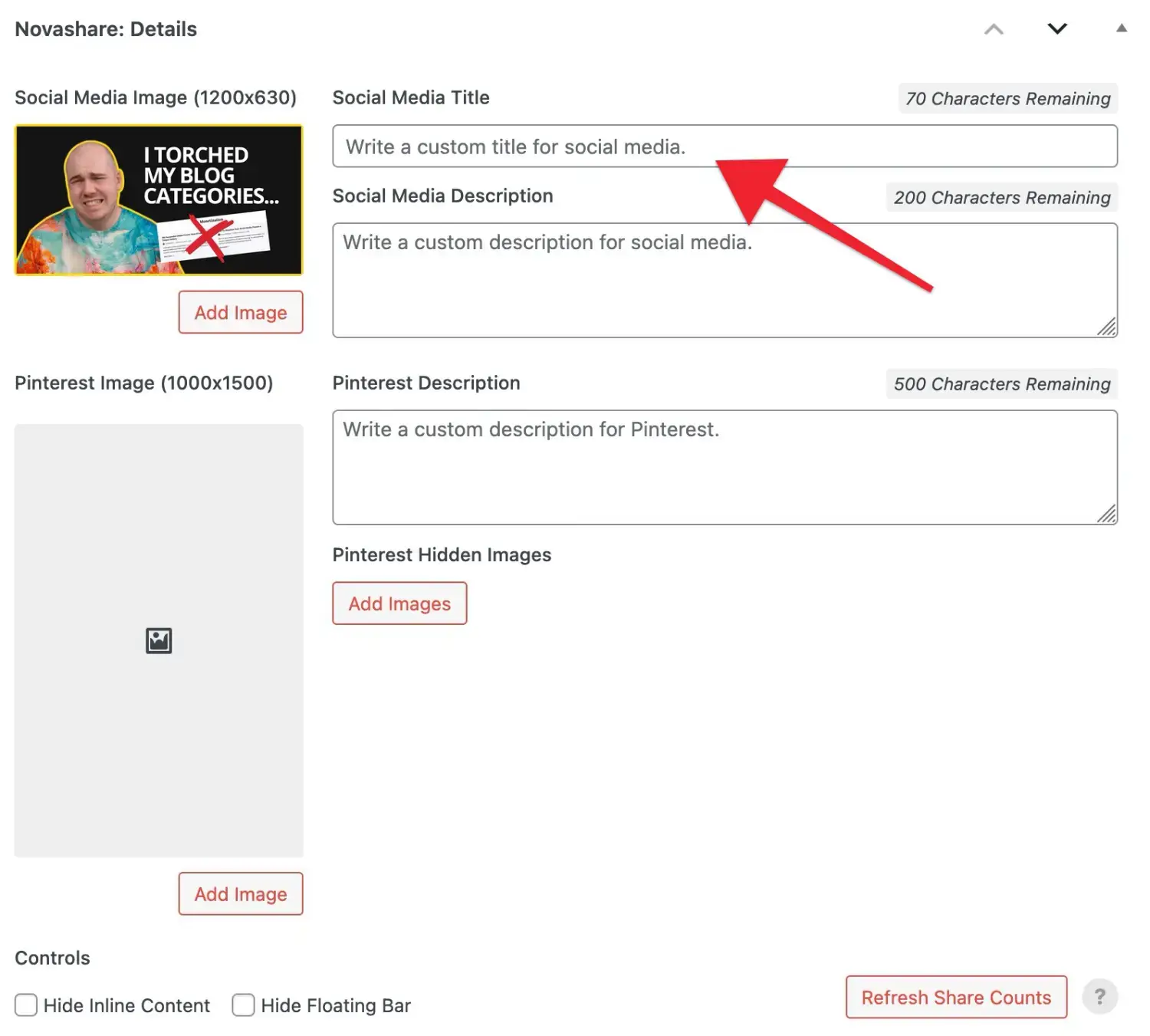
All nice and easy.
Note: Your main WordPress post title should be the same as your SEO title.
4 social media headline formulas you can use
Once you separate SEO titles from social titles, you’re free to write much more interesting headlines.
Here are four approaches that consistently perform well.
1. The permanent fix
People don’t just want tips. They want permanent solutions.
Compare these two headlines:
- SEO title: 10 Tips To Reduce Subscriber Churn
- Social title: How I Stopped Losing Email Subscribers Forever
The second version promises a definitive outcome rather than a list of suggestions. That subtle shift makes it far more compelling in a social feed.
2. The unpopular opinion
Social media thrives on controversy and contrarian ideas.
If your headline challenges conventional wisdom, people naturally want to see the reasoning behind it.
For example:
- SEO title: Why Site Structure Matters For SEO
- Social title: Why I Torched 14 Years Of Blog Content (And Why You Might Need To)
That kind of headline triggers curiosity immediately.
Note: This example is based on a real post I published. In that post, I wasn’t targeting any specific keywords. Because not every post has to. But if I was, this is how I would have done it.
3. The velvet rope
Humans hate feeling excluded.
The “Velvet Rope” headline works by implying that some people know a secret others don’t.
Example:
- SEO title: Advanced SEO Strategies For Bloggers
- Social title: What The Top 1% Of Bloggers Know About Traffic That You Don’t
The implication is clear: there’s insider knowledge inside the article.
And readers want access.
4. The curiosity gap
This technique focuses on the result without revealing the method.
Example:
- SEO title: How to Improve Page Speed On WordPress
- Social title: The One 5-Minute Fix That Doubled My Blog Traffic
The brain naturally wants to fill in the missing information.
That’s what creates the click.
How to implement this strategy without losing your mind
Look, I get it.
This ghost title strategy thing can look a bit daunting to implement. Especially if you’ve got a lot of blog posts.
But the easiest approach is to start with your new posts. Specifically those that you want to perform well on search and social. And just go from there.
This is why you won’t see me using this strategy on my older posts much. I don’t like the idea of updating 1,000+ articles across multiple sites. Ooooouch.
Sure, if you aren’t going after any specific keywords, you can skip the SEO title entirely and focus on a headline that will appeal most on social media. Just make that your main headline.
That’s what I’ll be doing for this post because I’m not targeting any specific keywords. And for those that think that’s a mistake; it isn’t. Not every post has to.
I mean, yeah, sure, you’ll still need to set a permalink or whatever. But it’s not like it’ll be backed by any keyword research.
So, use your best judgement. Implement this strategy when it makes sense to. If it doesn’t? Don’t bother with it.
Go with the flow.
Addressing the elephant in the room
I could gloss over the elephant in the room like they did in the last episode of Top Gear. No, the proper Top Gear.
But I won’t. We need to address it.
One of the biggest reasons why blog traffic from social media is so bad is because social media platforms hoard that traffic.
They look at attention and traffic like landlords look at your security deposit after they tell you “Yes, of course, everything is fine.”
And then go charging you £200 to hang a few curtains.
Anyway….
The point is that social media platforms have a vested interest in not letting people leave.
This is why they demote link posts.
If there’s links in the post. You’re cooked.
Now, here’s some good news:
There’s an alternative. You can post a link in the first comment instead.
Like I do for some of my posts on Facebook:
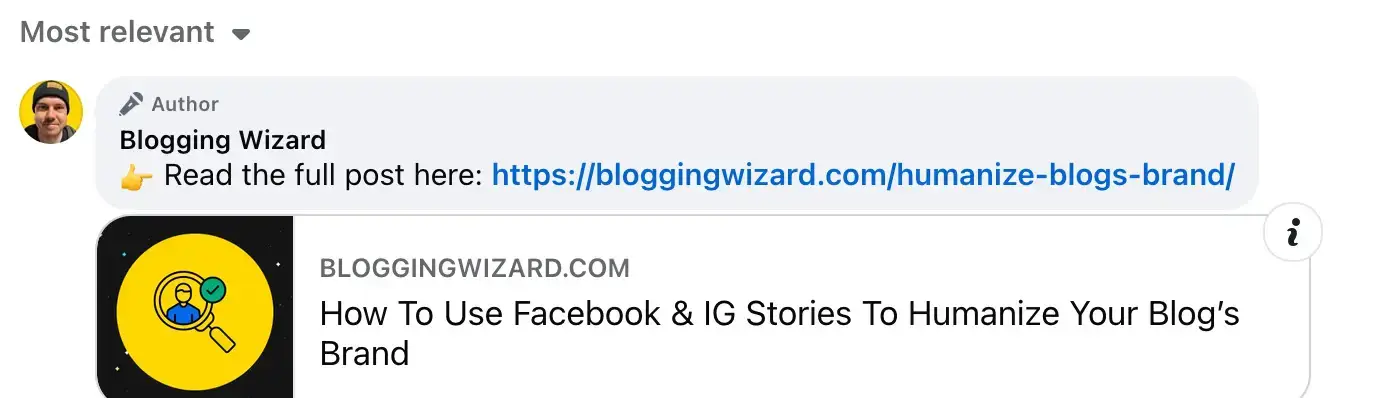
I still fire out link posts every so often because of the same reason I like Pringles. If you know, you know.
But if you use this first comment approach, you can get around social algos hammering your reach.
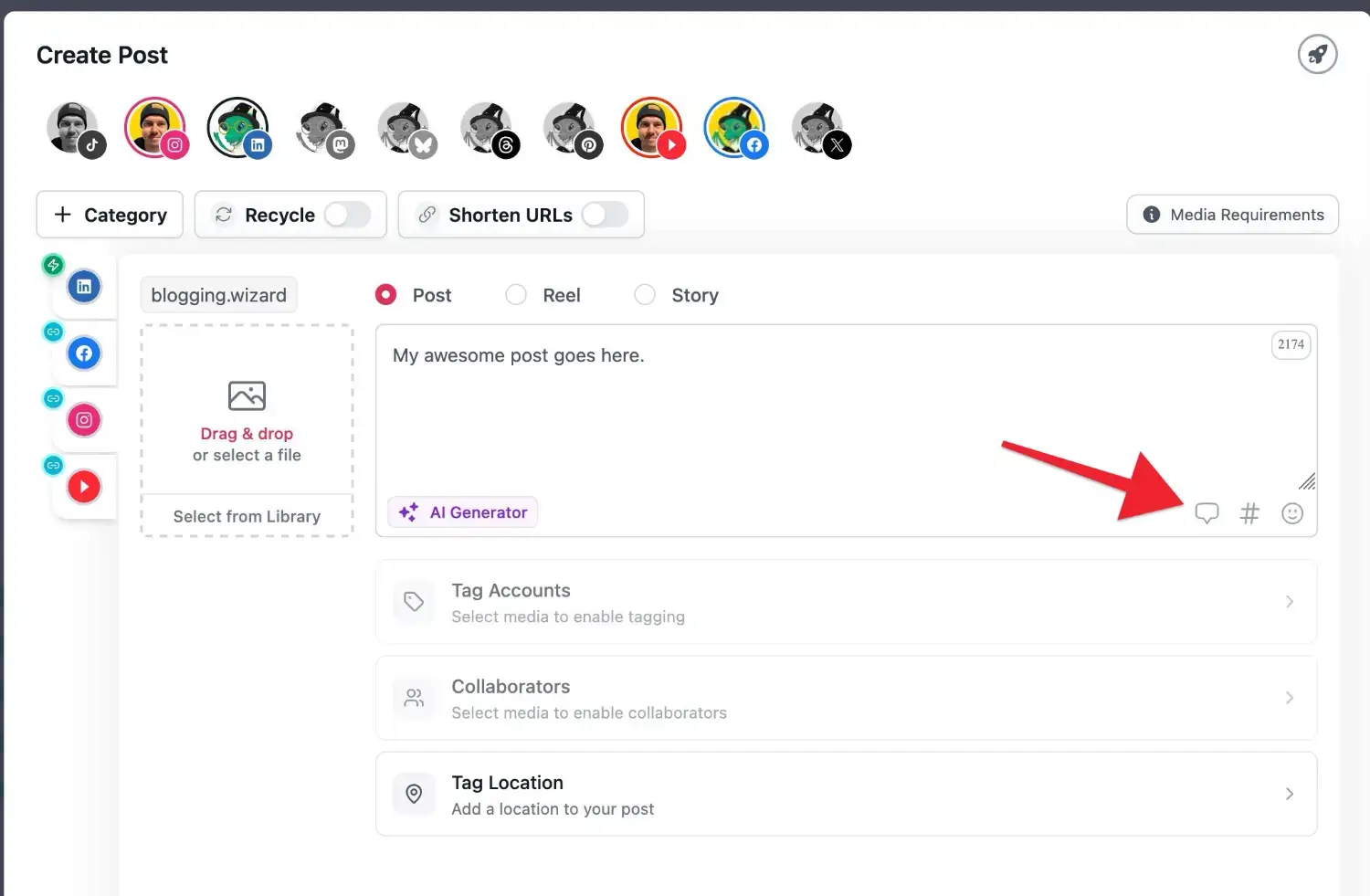
The only catch is that it’s tricky to do unless you use a social media scheduler that offers the first comment feature. And it’s not possible on all social networks.
I use Viraly for this. If the social platform supports first comment scheduling, you’ll be able to click a little button to add the first comment as you’re scheduling the post.
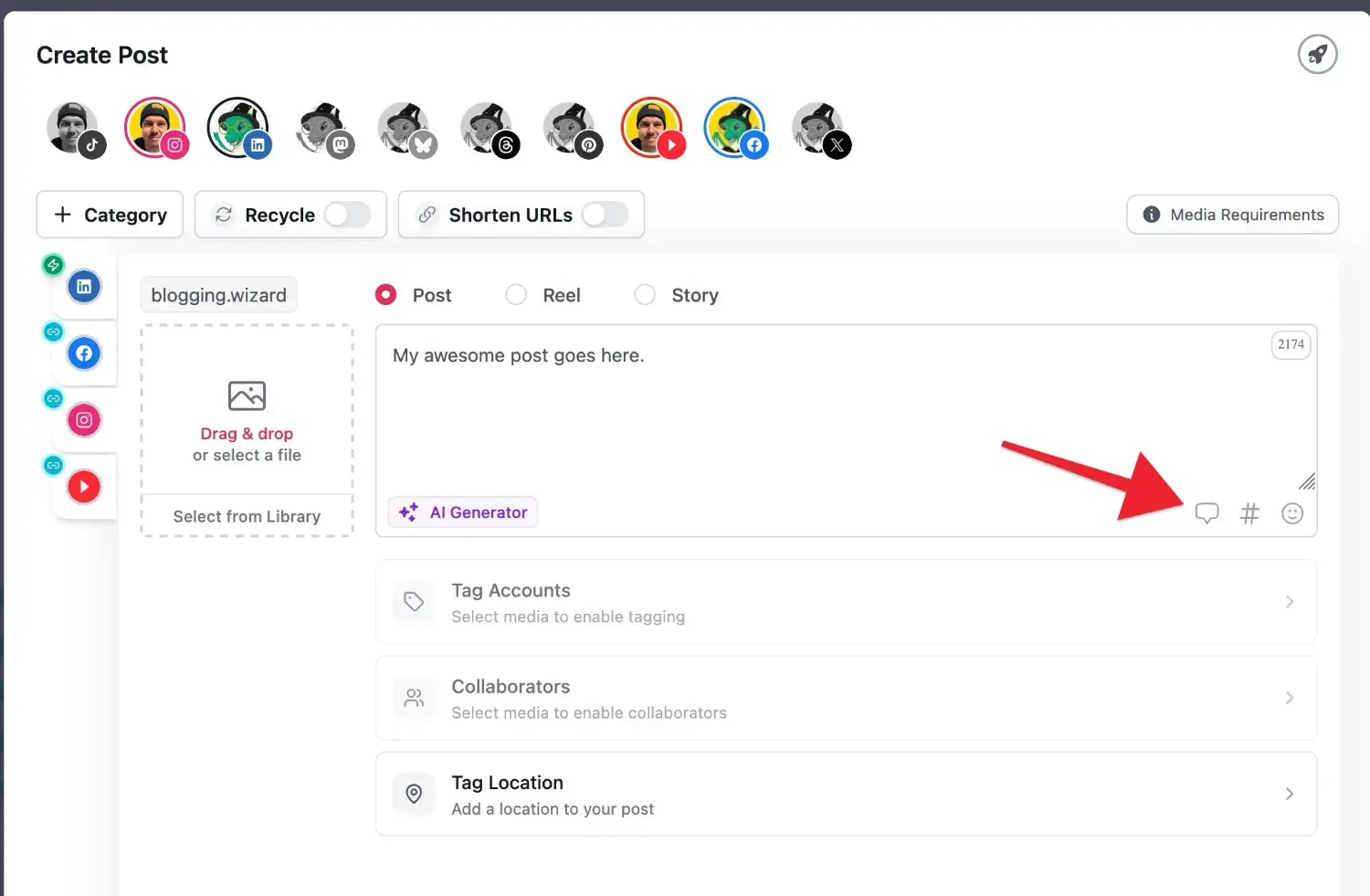
Note: Here’s some good news. Viraly offers a free plan. Click here to activate your free account here and start scheduling.
Final thoughts
SEO headlines help people find your content.
Social headlines help people care about it.
Those are two completely different jobs. And expecting one headline to do both well is unrealistic.
If you want your blog posts to reach a wider audience, you need to treat social media headlines as a separate skill. Not an afterthought.
So let Google see the keyword-rich title and let social media see the attention-grabbing one.
But don’t fret about your past posts. And if you’re not targeting any specific keywords, your main headline should be written for social media only.
Regardless of whether you implement this strategy or not, go with what makes the most sense for the content you’re publishing at the time.
Disclosure: Our content is reader-supported. If you click on certain links we may make a commission.







Post Comment