Unlock the Secret Formula to Crafting Presentation Scripts That Captivate Every Audience!

The mere thought of public speaking is enough to make many professionals break into a cold sweat. Standing in front of a crowd requires confidence, but much of that confidence actually begins long before you take the stage. It starts with the words you choose and how you arrange them on the page. A great presentation script relies heavily on specific grammatical choices that differ completely from standard written essays.
When we write an essay, we aim for sophisticated prose. When we write a script, we must write for the ear. The main goal of this article is to teach you the specific grammatical rules and structures necessary to write a highly engaging script. By mastering spoken grammar, you will keep your audience captivated from your opening sentence to your final word.
What is the Difference Between Spoken and Written Grammar?

Understanding the fundamental differences between how we write for the eye and how we write for the ear is the first step in crafting a successful speech. Written grammar allows for complex formatting and compound sentences because the reader has the luxury of time. If a reader becomes confused, they can simply reread the text. Spoken grammar does not offer this luxury.
Structuring Sentences for the Ear
When you speak, your audience only hears the information once. Even when your points are supported by Decksy presentation software, spoken grammar requires shorter sentences and much simpler syntax so the audience can process the information audibly without losing the thread of your argument. You must strip away overly complicated clauses and focus entirely on clarity.
Converting Complex Ideas into Simple Speech
Translating a written document into a spoken script often involves breaking long thoughts into smaller, digestible pieces. Consider the difference between these two approaches:
- Written grammar example: Due to the unforeseen market fluctuations that occurred in the third quarter, our profit margins decreased by ten percent, which ultimately led to the strategic decision to restructure the marketing department.
- Spoken grammar example: The market fluctuated wildly in the third quarter. Because of this, our profit margins dropped by ten percent. As a result, we decided to restructure the marketing department.
Why Should You Use Active Voice in Your Presentation Script?

The voice you choose for your script dictates the energy of your entire presentation. In the context of speechwriting, the active voice occurs when the subject of the sentence performs the action. The passive voice occurs when the subject receives the action. While passive voice occasionally has a place in formal academic papers, it is detrimental to a spoken presentation.
Projecting Confidence and Authority
Active voice makes the speaker sound significantly more confident, direct, and engaging. When you use active phrasing, you take ownership of your statements. Sentences become shorter, punchier, and much easier for the audience to follow. Passive voice often sounds evasive or overly bureaucratic, which can quickly put an audience to sleep.
Examples of Active Versus Passive Phrasing
To see how transformative this grammatical shift can be, look at these three distinct examples comparing passive phrasing to active phrasing in a business presentation context:
- Passive: The new software was launched by our development team in August.
- Active: Our development team launched the new software in August.
- Passive: It was decided by the executive board that the budget would be increased.
- Active: The executive board decided to increase the budget.
- Passive: Significant improvements in customer satisfaction have been noted by our analysts.
- Active: Our analysts noted significant improvements in customer satisfaction.
How Do You Use Transitional Words for Spoken Flow?

A presentation is a journey, and your audience needs clear directions to follow along. This is where transitional conjunctions and phrases come into play. Words like however, furthermore, and therefore play a crucial role in guiding an audience from one slide or topic to the next.
The Grammatical Function of Verbal Signposts
In spoken grammar, transitions act as essential signposts for the listener. They signal a shift in thought, introduce a contrasting idea, or indicate that a conclusion is approaching. Without these grammatical bridges, your presentation will feel disjointed, and the audience may struggle to understand how your points connect to your overarching theme.
Top Transitional Phrases for Speakers
You should avoid overly academic transitions like “heretofore” or “thusly.” Instead, rely on natural, conversational transitions. Here are five highly effective transitional phrases specifically tailored for spoken presentations:
- “Moving on to…” (Excellent for transitioning to a brand new slide or topic).
- “On the other hand…” (Perfect for introducing a contrasting piece of data or an opposing viewpoint).
- “What this means for you is…” (A powerful phrase to connect a broad concept directly to the audience’s interests).
- “To put this into perspective…” (Useful when shifting from raw data to a relatable example).
- “As a result…” (A clear way to show cause and effect between two points).
Where Should You Add Pauses and Punctuation?

When writing a script, punctuation is not just about grammatical correctness. Standard grammatical punctuation fundamentally changes its function in a presentation script, transforming from structural rules into literal stage directions.
Reading Punctuation as Stage Directions
You must train yourself to see punctuation marks as breathing cues and timing mechanisms. Commas act as short, natural breaths that give the listener a split second to absorb a point. Periods act as full stops or deliberate subject changes, requiring a longer pause. Ellipses indicate thoughtful, dramatic pauses that build anticipation before you deliver a key piece of information.
Visualizing Your Speech Patterns
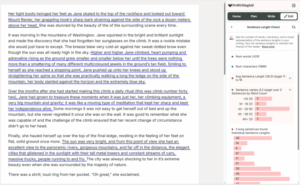
To master this technique, you can physically mark up your script with highlighters or bold text to remind yourself exactly when to stop and breathe.
How Can You Conclude Your Presentation Script Effectively?
Writing a script for a presentation ultimately requires a shift in how you view language, moving away from complex written essays toward clear, spoken communication. By relying on shorter sentences, utilizing the active voice, and treating your punctuation as deliberate stage directions, you can craft a script that captures and holds attention. We have covered the necessity of choosing simple syntax over compound structures, the authority gained by placing the subject before the action, and the importance of using verbal signposts to guide your listeners from one point to the next.
All of these grammatical choices work together to eliminate confusion and elevate your public speaking skills. Once your words are perfectly tailored for the ear, you need the right visual platform to bring your ideas to life. You can seamlessly pair your meticulously written speech with Decksy presentation software to deliver a truly unforgettable experience for your audience.