Unveiling Hidden Truths: How Dorothy Roberts’ Memoir Challenges Everything We Think About Race and Family
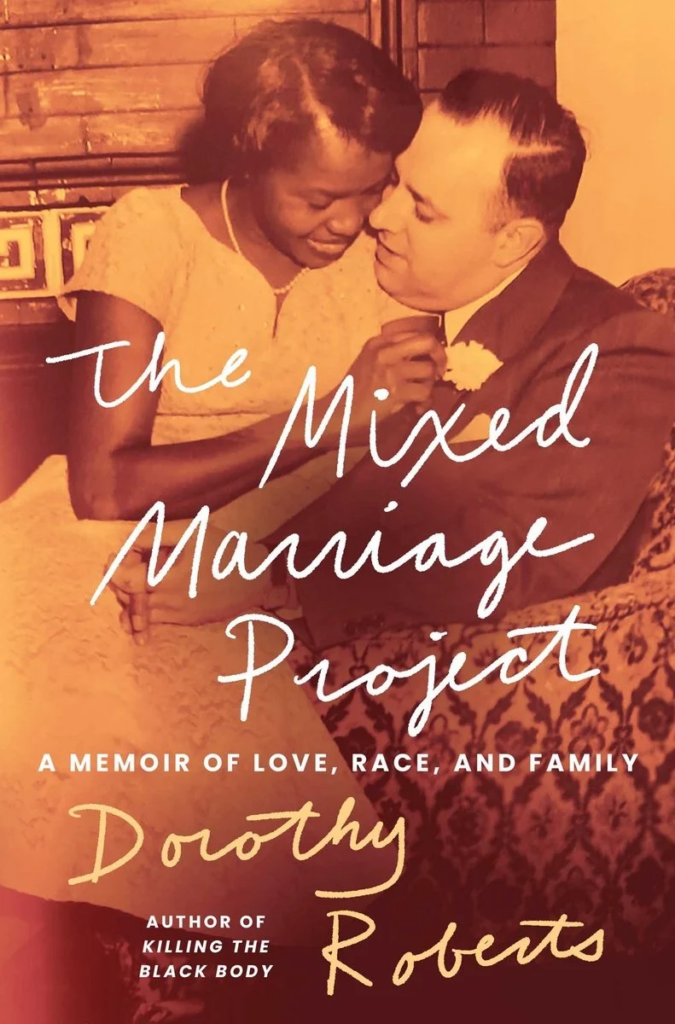
The reader sits with Roberts as she sips tea in her living room, office, and kitchen and reads interview upon interview her father (and later her mother) conducted with mixed-race couples. What is revealed in these interviews sheds new light on the complexities of race relations and the nuances of racial prejudice. The reader learns about anti-misegenation laws (at their peak, thirty states prohibited mixed-race marriages), eugenic sterilization, the so-called one-drop rule (a knuckled-headed concept that any amount of “Black blood” makes a person Black), colorism, the extreme prejudice directed at Black women, the practice of Black Americans “passing” as whites mostly for economic reasons, the Great Migration’s impact on Chicago demographics resulting in a Black Belt where Black residents were contained, and the parallel “flight” of affluent whites to the suburbs that decimated property values in the city. I was familiar with all of this before reading The Mixed Marriage Project, but Roberts’ incisive analysis taught me to think in new ways—and more deeply—about racism.