WordCamp US 2026: When Creativity Meets Code — What Happens Next Will Surprise You
On the topic of teaching and learning, the WordPress 101 session felt complimentary to the WordPress.com Student Plan we launched at WCUS. Students get to learn on a real WordPress site, not a temporary classroom project, and the work they create can stay with them after the course ends. Learn by making something real, then keep building on it.
Jamie’s enthusiasm for WordPress is contagious; in fact, halfway through his session, a pigeon flew into the room and settled in. It came for the air conditioning, stayed for the demo.
Sessions geared toward creativity, simplicity, and customer centricity
In line with the art and technology theme, WordPress 7.1 “Mary Lou” shipped during WordCamp – a release named after the pioneering jazz artist, packed with new styling tools, updated media flows, added notes functionality, and more.
The opening keynote, Dreaming with AI: Innovation Lessons from the Front Lines of Disney & Meta, was delivered by Loyal Pyczynski. His perspective: AI can help teams build products that are more useful and more distinctly human, but only if you bring creators, developers, researchers, and communities in early, let real experimentation drive decisions instead of assumptions, and keep human judgment at the center.
And his test for whether you’ve done your job? User attention. If the thing you’ve made is good enough, people won’t get distracted — they’ll look up and realize time has gone by and they want to keep going.
Nearly half of the sessions were AI-focused or AI-adjacent, the biggest showing at a flagship WordCamp to date. The program covered agentic development, AI-powered plugin pipelines, vibe coding for non-technical users, block themes and AI in agency workflows, WordPress readiness for the agentic web, and more.
The closing session with Matt Mullenweg and Robert Jacobi brought it back to simplicity. WordPress co-founder and CEO of Automattic, Matt Mullenweg, pulled out his camera and snapped pictures of the audience, saying he’s bringing back @photomatt – a playful nod to the handle he uses on Tumblr and X. During the fireside, he also spoke to the need for technology to get simpler. Over time we have a tendency to make things more complicated, but wisdom brings us back to simplicity. Matt’s stories and tech references are laced with poetic references that tie back to technology.
Which brought me back to the desert. Nothing wasted, everything with a purpose — perhaps the hardest thing to build and the last thing you arrive at.
WordPress Studio shines
At the WordPress.com booth, our agentic local development tool, WordPress Studio, drew people into longer-than-planned demos, with attendees gathering around the screens to watch sites being built and changed in real time.
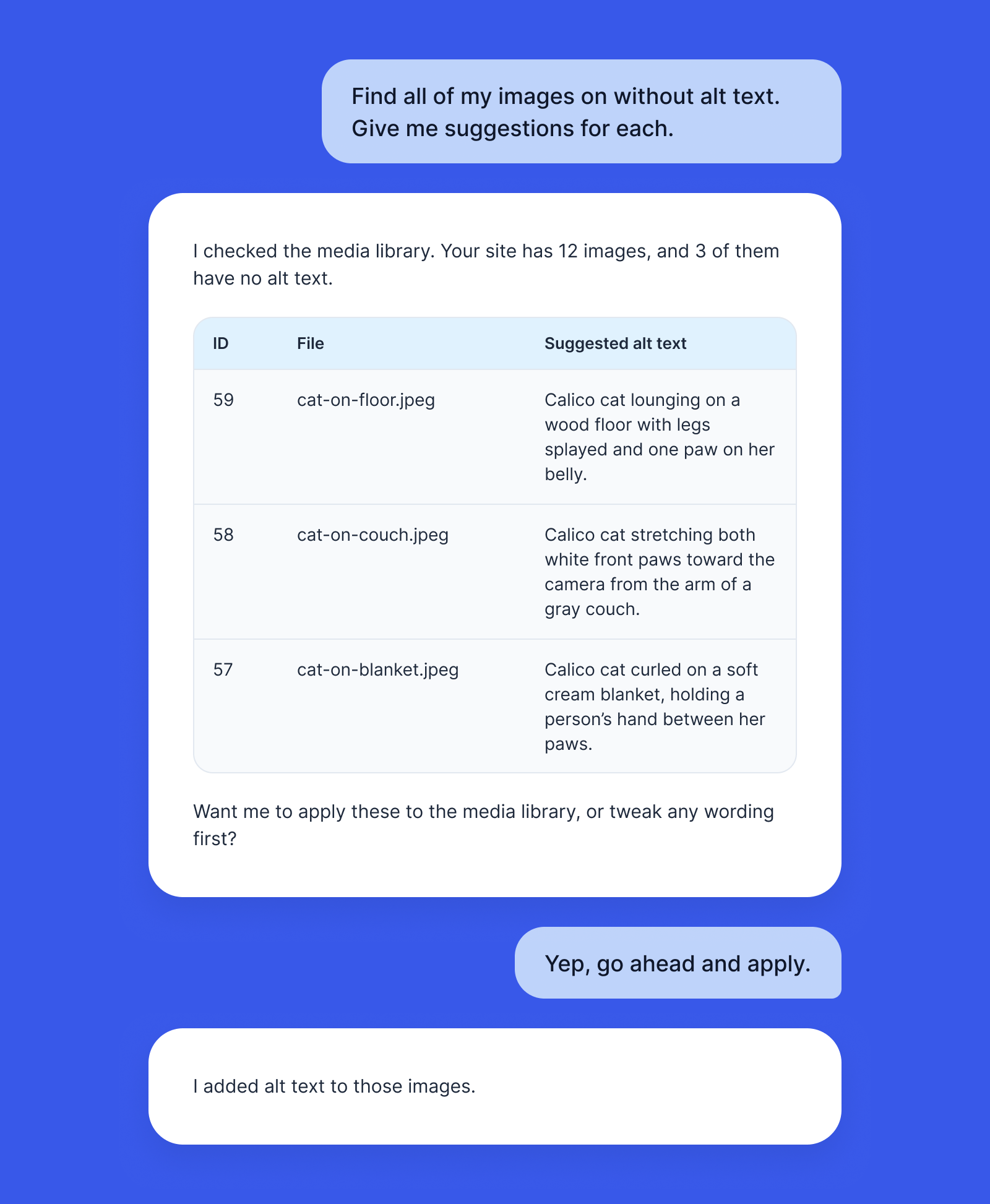
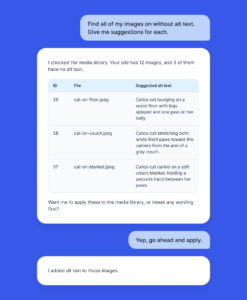
Right alongside it, WordPress Agent showed another side of the same idea: AI that doesn’t just advise you, but can actually make changes to your site for you. We also demoed Guidelines, which gives the Agent a shared memory of your site’s voice, goals, and visual direction.
What interested me was how quickly the conversation moved past the demo itself. People were already imagining these tools inside the way they actually build, manage, and update WordPress sites.
WCUS played to our humanity
The tactical experiences, the emphasis on play, the prioritization of creators, and the endless photo opportunities are all part of what made this conference uniquely human.
It’s a tech conference, after all, but I was absolutely delighted by the way it transcended digital sameness and AI-driven standardization to stand out and speak to our humanity.