Uncovering Peter Scott: The Untold Secrets of Colonial Williamsburg’s First Cabinetmaker Revealed
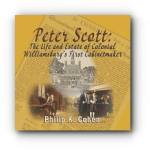
The second half focuses on the only surviving copy of the Account of Administration (AoA) of his estate, a manuscript acquired by the author and donated to the Colonial Williamsburg Foundation. It reads like a Who’s Who of colonial Williamsburg. Among the debtors to his estate were Colonel John Henry, father of Patrick Henry, and Thomas Jefferson, whose dealings with Scott and his executor are analyzed in detail. The AoA’s structure and accounting are thoroughly explicated.
Attention shifts from Scott to his estate and surviving executor, Robert Nicolson, a fellow Scotsman, tailor, and investor. In order for the reader to understand Nicolson’s strategies and actions to preserve the value of Scott’s estate, which was frozen during the Revolutionary War because his principal heir lived in the enemy territory of Great Britain, interdisciplinary context is necessary. The impact of relations between the colonies and Britain before, during, and after the war as independent states in a new nation, are outlined with emphasis on international trade. The commercial practices of Virginia’s credit-driven economy, centered in the capital city of Williamsburg, are addressed, as are international monetary and trade systems, balance of trade, exchange rates, and bills of exchange. Absent institutional banks, currency exchanges, and checking accounts, but faced with essentially the same commercial needs as modern economies, the colonies found effective ways to conduct business. These are described because they apply to Nicolson’s responsibilities as executor.









Post Comment