Unlock the Hidden Social Media Secret That Transforms Your Blog Into a Money-Making Machine
What are the stages of a social media funnel?
A social media funnel is a variation of a typical sales funnel. The only difference is you optimize the funnel with the specific intent to launch it on social media.
The typical sales funnel has four stages: awareness, interest, consideration and conversion.
It’s called a funnel because your customer enters it through the top at the awareness stage and exits it through the bottom at the conversion stage.
Because social media can be used as a tool for community engagement as much as it can be used as a tool for marketing, it offers a couple additional stages.
They are engagement and advocacy.
Here’s a brief explanation of each stage in a social media funnel:
- Stage 1: Awareness – A member of your target audience becomes aware of your blog (and your brand in general) on social media.
- Stage 2: Interest – The audience member has seen a few posts from your brand and is interested enough to engage and maybe even follow your account.
- Stage 3: Consideration – Your follower has seen a few promotional offers from your blog on social media and is considering subscribing to your email list to take advantage of one.
- Stage 4: Conversion – Your follower visits your blog and becomes an email subscriber.
- Stage 5: Engagement – Not only does your follower subscribe to your email list, they also actively engage with your content on social media.
- Stage 6: Advocacy – Your follower shares your content with friends, family, colleagues and their own following.
This funnel works for promoting products on social media as well. You just need to add a few steps after Stage 5 to convert an email lead into a full-fledged customer.
I’m going to share tips on how to set up your content marketing strategy in a way that moves your followers through this funnel.
Improve your blog’s social media presence
If you want your funnel to work more effectively, you need to improve your blog’s marketing strategy.
This includes having a solid plan for social media distribution and improving your social media presence overall.
Start by figuring out which social media platforms you should be prioritizing.
You can use social media scheduling tools like SocialBee or Viraly to cross post content to more than one platform at once. This means you can prioritize TikTok but post videos for TikTok to Instagram Reels, YouTube Shorts, Facebook Reels and Pinterest (as video pins) at the same time.
View your blog’s traffic analytics first and foremost. It’ll tell you which platforms you already have a presence on.
You can also see which platforms you receive the most engagements from and which platforms have the highest amount of engagement for your niche.
Once you figure that out, it’s just a matter of posting better social media content more often to those platforms.
Check out these guides for more help in this department:
Come up with a compelling offer
If you want your followers to leave social media and visit your blog, you need to give them a compelling reason to do so.
Offer them something irresistible, something they can’t get on social media.
Here are a few ideas:
- Lead magnet
- Unique perspective
- Solution to a problem
Lead magnet
A lead magnet is a free offer you give to a reader in exchange for their email address.
Examples of offers include ebooks, checklists, free downloads, etc.
In order to receive their offer, your reader must subscribe to your email list. Once they confirm their subscription, they’ll be able to download their offer.
Oftentimes, telling your social media audience to “learn more” by visiting your blog isn’t enough to get them to visit. Offering them a free guide or a downloadable checklist, on the other hand, might just do the trick.
Unique perspective
This is something providing a unique perspective or a solution to a problem can do as well.
A “unique perspective” is your own personal take on a topic that’s based on your own experience with that topic.
This is something Backlinko does a lot with their content.
A lot of blogs in the SEO niche write content in the same way. Their content is actionable, but it’s not personable. Even worse, they show no proof for the claims they make.
Backlinko, on the other hand, always ties its advice back to backlinko.com. They show real data for their own domain and real statistics from studies they’ve conducted themselves.
Another great example are fashion and lifestyle blogs. These types of blogs thrive on relatable content that’s infused with the blogger’s personality.

If you have a unique or interesting perspective on a topic, go into detail about it on your blog, and tease those posts on social media.
Solution
Finally, you can offer a solution to a problem your audience is experiencing.
This method is a little different from the lead magnet method. With this method, you’re providing a direct solution to your reader. A lead magnet, more often than not, simply helps them achieve that solution on their own.
Let’s say you own a bait shop that has an active blog.
You sell bass fishing flies you make yourself, but you also offer a free ebook that teaches readers how to make their own flies.
The bass fishing flies you sell in your store are direct solutions to your reader’s problem while the ebook is a guide that helps them solve that problem on their own.
To put things simply, you need to give your follower more of a reason to leave social media and visit your blog. Do this by offering something special your followers can only receive by visiting your blog.
Get your audience interested in your offer
You don’t necessarily need to promote a blog post in order to promote your offer on social media. You can create landing pages that are specifically designed to promote your offer.
Use a landing page builder like SwipePages to get the job done easily. OptimizePress is a good solution for WordPress users.
No matter what kind of offer you want to promote, make sure your landing page has the following elements:
- Call to action (CTA) – Your landing page should have at least two CTAs: one at the top and one at the bottom.
- Features – A list of features your offer includes.
- Benefits – Explain how your offer will benefit your reader. These can accompany your features.
You should also include testimonials if some of your readers have already taken advantage of your offer.
Including personal or company highlights is another way to provide credibility. Highlights might include media mentions and accomplishments you’ve achieved in your niche.
Here’s an example from Blogging Wizard’s newsletter page:
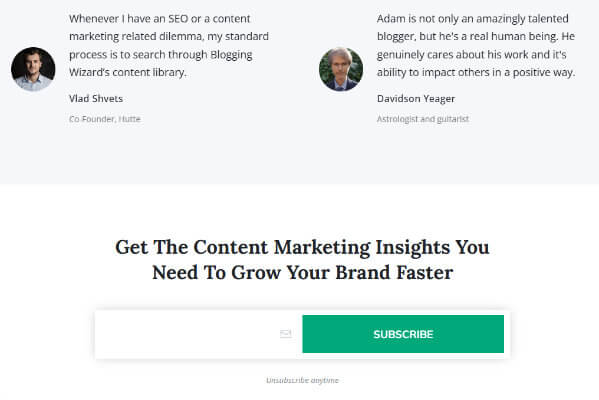
It has two CTAs, testimonials and media mentions.
Make sure the page uses a similar design as the rest of your website. This includes colors, typography and image styles.
You might also want to consider removing your header and footer from this page. This will prevent your follower from getting distracted by other pages on your website.
Start promoting your offer on social media, even if you don’t necessarily attribute it to a specific post on your blog. This can increase awareness for your blog on social media in general and generate interest.
Create a link-in-bio page
If you promote your offer or blog post from platforms like TikTok and Instagram, you won’t be able to include a link with your promotion.
This is because these platforms don’t allow you to add links directly to posts. You can only add one custom link to the bio section of your profile.
A lot of creators link to what’s known as a link-in-bio page instead of the actual link they’re promoting.
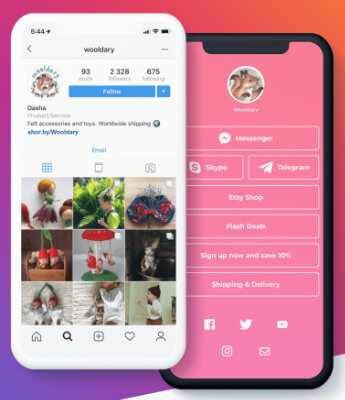
A link-in-bio page is a simple, mobile-optimized web page that’s designed to host nothing but links.
Use Shorby to create a page for yourself. It has link cards that allow you to add images to buttons.
Related: Best Instagram Link in Bio Tools Compared
If you don’t want to use a link-in-bio page, use a tool that lets you create human-friendly shortlinks instead.
Pretty Links is a good solution if you use WordPress. Sniply is great for all users, and Replug is the best option for marketers.
Create click-worthy content on your blog
A more efficient way to build a social media funnel that creates a pipeline from your social media content directly to your blog is by creating better content on your blog, then repurposing it as social media posts.
To do this, find out what your audience cares about most, and create content for that topic.
When you write blog posts, try to put a unique spin on them.
Instead of creating a post called “Best Bass Fishing Lures,” create one called “The Bass Fishing Lures I Used to Catch My Biggest Bass Yet.”
If you’re solving a specific problem, include the solution in your title.
For example, if your post about bass fishing lures targets beginners, create a post called “Use These Bass Fishing Lures to Catch Your First Bass.”
The more compelling your blog content is, the more likely your followers will be to leave social media and visit your blog.
Distribute blog content to social media
Like I said, the best way to create a pipeline that connects your social media content to your blog is by repurposing your blog content as social media posts.
Start with your most popular content, and turn it into social media posts in the following ways:
- Creating multiple short-form videos from a single blog post. You can automate this process by combining tools like NotebookLM and Canva Pro.
- Creating one short-form video that summarizes your blog post.
- Condensing your post into a carousel for TikTok and Instagram.
- Turning a quote from your post into an image.
- Turning facts from your post into an infographic.
- Summarizing your post into a multi-post thread for Twitter (X), Threads and Bluesky.
- Creating a long-form video for your post on YouTube and Facebook.
For example, we published a review for the social media management tool Vista Social here on Blogging Wizard.
Then, Adam created a video version on Blogging Wizard’s YouTube channel.
I’m sure you’re used to seeing social media content that features someone talking to a camera and demonstrating things in videos. But you don’t necessarily need to put yourself on camera in order to succeed on social media.
Plenty of creators earn engagements from faceless videos. You can narrate faceless videos or get your point across through text.
Use Kapwing to edit videos, especially short-form videos. Use graphic design tools like Visme and Canva to edit images.
Link everything together
Here’s what you should have by now:
- Blog post your readers love
- Social media content inspired by that blog post
- An offer of some kind
This takes care of Stages 1, 2 and 3 in our social media funnel. They are Awareness, Interest and Consideration, in case you need a refresher.
In order for any funnel to work effectively, it needs to include a process that moves leads from the first stage to the last stage.
This means you need to link all of these content types together.
By repurposing your blog post into social media content, you’ve already linked these two content types together.
Do your best to come up with offers that integrate nicely with your content as well.
You can come up with one big offer that applies to multiple posts or create content upgrades that apply to specific posts.
My example about an ebook that teaches readers how to make their own bass fishing flies is an example of a content upgrade. It would perform best if I only promoted it on posts that talk about bass fishing.
A big offer that would apply to all posts would be an ebook that teaches beginner anglers everything they need to know to catch their first fish.
An ecommerce offer would be a product I sell that applies to fishing in general, not just bass fishing (unless my entire niche is bass fishing).
Here’s how your funnel should work so far:
- Social media users become aware of your blog when they see one of your repurposed posts on social media (and learn about your offer).
- Social media users become interested in your blog and/or offer after seeing a few of your posts. They follow you on social media at this point. This is why it’s important to improve your social media strategy overall. Algorithms need a reason to recommend your content to users.
- Your followers consider visiting your blog and taking advantage of your offer.
Some social media users will convert from the very first post they see from you.
Others need a little more time. This is why I highly recommend creating several posts for your offer.
Optimize social media posts for maximum reach
Every social media platform is different, but they each have a process for recommending content.
One of those processes directly affects content distribution by specifically demoting content that violates the platform’s terms and conditions.
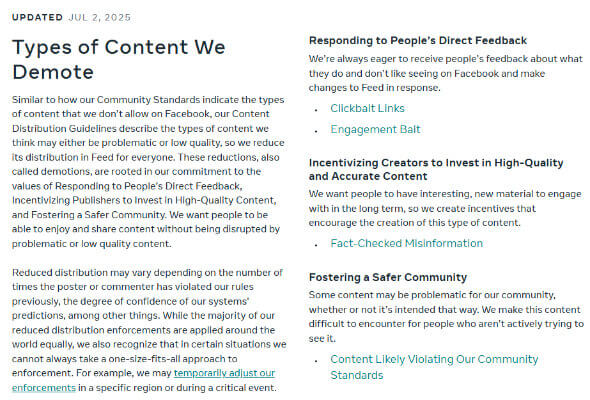
In this case, while the content might not violate those terms enough to warrant a ban or removal, it won’t be promoted in user feeds as often as other content does.
To ensure your content does not get demoted, follow these guidelines:
- No hate content
- No ragebait or clickbait
- Limit swearing, or try not to swear altogether
- Don’t portray nudity or sexual content
- Don’t showcase drugs
- Limit alcohol use, or don’t show alcohol altogether
- No portrayals of violence
- No portrayals of dangerous acts
- No portrayals of blood or serious injuries
- Use engaging captions
- Limit hashtag use
- Include only relevant hashtags in posts
- Be consistent with content types
- Be consistent with content styles
- Use a consistent posting schedule
- Don’t include URLs in captions on TikTok and Facebook
- For Facebook posts, include your link as the post’s first comment instead of inserting it in the post itself. You can schedule a first comment as you schedule the post itself with SocialBee.
Consider buying social media ads
To improve your reach, consider boosting posts and promoting your offers in ads, particularly on platforms like Facebook.
Facebook Pixel is a bit of code you insert on your website that retargets website visitors with ads you purchase on Facebook.
You can also target Facebook users who have shown interest in similar creators.
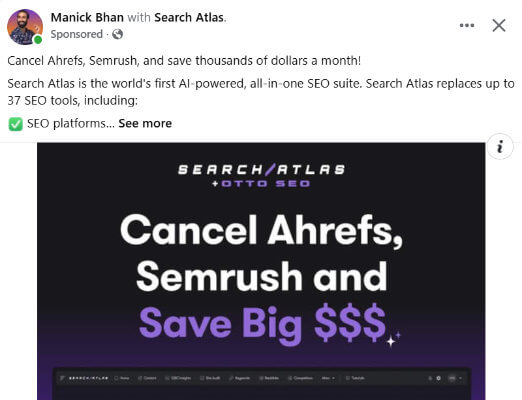
Facebook allows you to set daily spending limits for campaigns to ensure you don’t over spend on ads.
Organic reach is best, but if you’re having trouble reaching your audience organically, don’t be afraid to experiment with ads here and there.
Insert opt-in forms on blog post pages
Because your funnel links social media content to blog posts, it’s best that you insert opt-in forms on blog post pages as well.
You should really do this anyway as a way to convert blog visitors who found your blog from sources other than social media, such as search engines.
I highly recommend using ConvertBox to create opt-in forms.
This tool offers six different opt-in form types, numerous triggers, several integrations, segmentation, and A/B split testing.
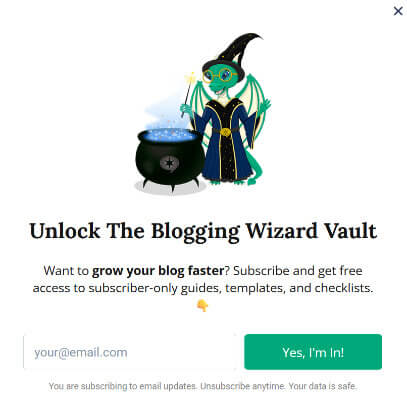
We use it for every opt-in form you see here on Blogging Wizard.
These opt-in forms, along with the opt-in forms you insert on landing pages, take care of Stage 4 of our social media funnel, which is conversion, but we can do better.
Nurture new subscribers
If all you want to do is convert more of your followers on social media into readers/email subscribers, your Stage 4 is done.
If you have products you want to sell (either your own products or affiliate products), you can convert email subscribers into customers.
The process is called “nurturing.”
Basically, you send subscribers down an additional sales funnel that eventually converts them into paying customers.
This is normally done over the course of a few emails.
Provide additional value to your subscriber with free guides, courses, or resources. Mention your product (or affiliate product) in one of your emails.
Then, directly promote that product in the final email of the funnel. Offer a special discount to subscribers who don’t make a purchase from that first email.
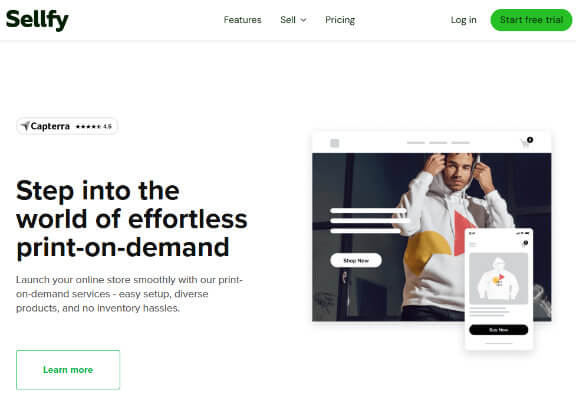
If you’re not selling your own products, yet, the ecommerce platform Sellfy lets you create a merch store where products are produced and shipped on demand.
ThriveCart is a fantastic solution for digital products, especially online courses. It’s a shopping cart solution that has its own landing page features.
Turn new subscribers into fans
It’s much cheaper and less time consuming to promote new posts and products to current email subscribers than it is to restart the funnel over again to target new followers.
For this reason, you should consider using your email list and social media content to turn your followers into fans.
Keep up with your posting schedule at minimum.
Host livestreams often, especially subscriber-only livestreams.
Ask subscribers what struggles they’re going through regularly, then create content (and maybe even products) that targets those struggles.
When your community requests new content, make it!
The key to a thriving community is delivering on what that community wants the most.
This takes care of Stage 5 of the funnel, which is Engagement.
Convince subscribers to share your content with others
True fans will share your content with others organically.
Fortunately, there are things you can do to convince them to share your content.
For starters, you can simply say “target someone who,” then fill in the blank, like “target someone who hasn’t caught a bass in a really long time.”
A more effective strategy would be to host a giveaway and make following you and sharing a specific post requirements to enter the giveaway.
This is something SweepWidget can do. It lets you host social media giveaways on your website.
This takes care of the final stage of the funnel: Advocacy.
You now have a funnel that turns social media users into followers, then email subscribers, then fans, and finally community advocates.
Related: SweepWidget Review: Social Media Contests Made Easy
Final thoughts
Social media platforms are a great way to attract and build an audience but they’ll chew your business up given half the chance.
They’re not platforms that can be relied upon. One algo tweak and your ability to reach the audience you have on those platforms tanks.
This is why it is so important to build a social media funnel that sends people to platforms you can control. For example, your email list.
Once they’re a subscriber, you can reach them any time you like.
And it makes launching & selling new products far easier.
Disclosure: This post is sponsored but our opinions are our own.






Post Comment