Unlocking the Secrets to Building AI That Navigates the Twists of a Shifting IP World
- Integrate rights‑checking directly into daily tools so validation happens in‑flow across browsers, productivity apps, and code assistants.
- Publish clear escalation paths with response SLAs and named contacts, supported by a simple intake that captures purpose, data, model, and intended audience.
- Create centralized intake pathways for AI requests and route them through cross‑functional triage spanning legal, compliance, and technology to prevent shadow AI and duplicate efforts.
- Define risk tiers with right‑sized controls, using pre‑approved patterns for low‑risk work and stricter review for higher-impact or sensitive data use cases.
- Provide isolated sandboxes with guardrails, including data egress limits and restricted connectors, to enable safe experimentation.
- Embed guardrails in tools by default, such as pre‑approved models and connectors, privacy‑preserving defaults, and in‑product guidance that nudges correct choices.
- Maintain an approved vendor list with permitted uses surfaced at the point of choice, and regularly review vendor behavior for alignment with policy.
- Offer scenario‑based training and office hours, and appoint team‑level champions who reinforce good habits and resolve gray zones quickly.
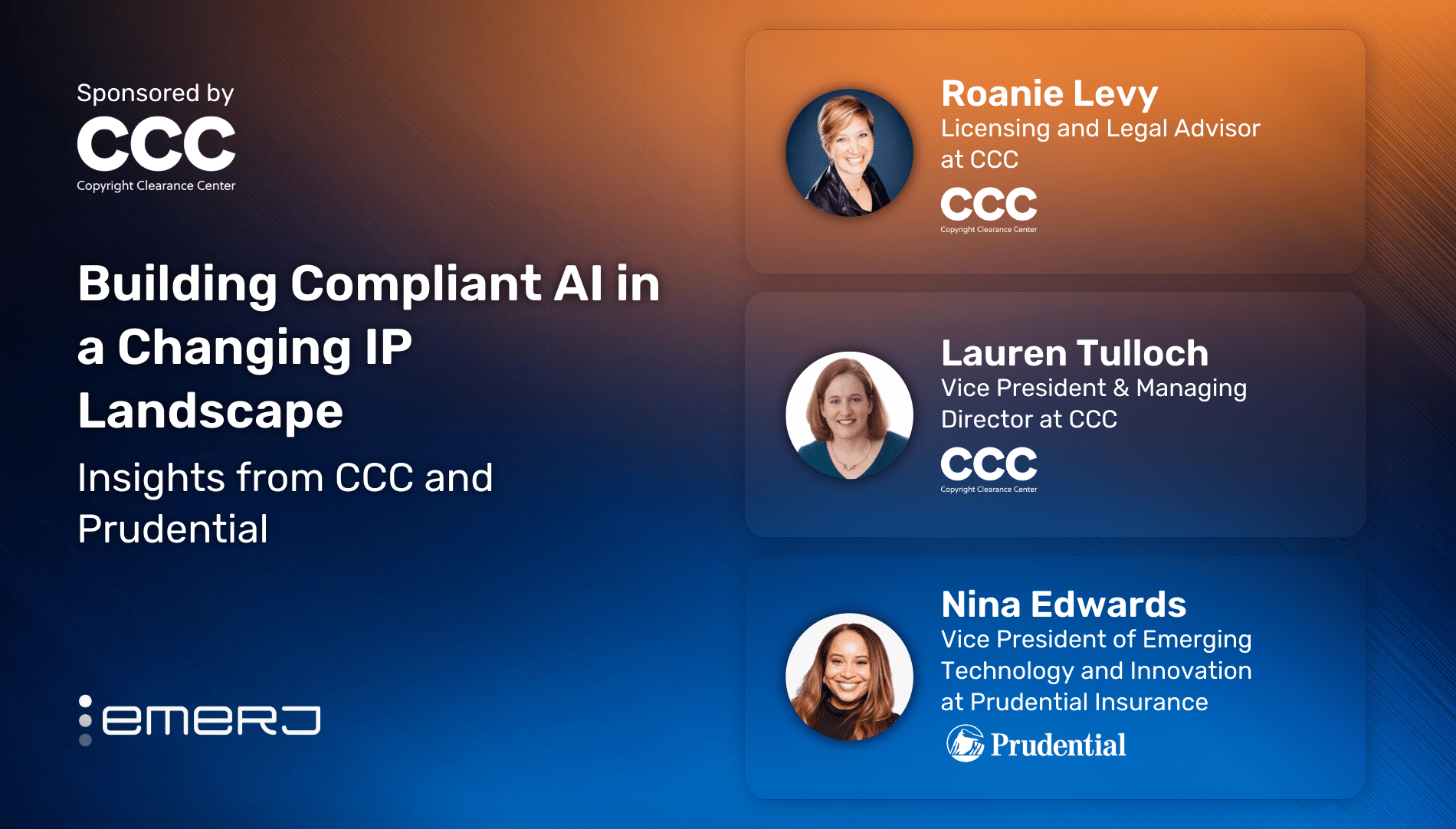
Provenance is emerging as a backbone of defensible AI at scale — an idea Nina Edwards highlights in her episode as enterprises move toward provenance-by-default: approved models, licensed inputs, and origin signals embedded into workflows, enabling lineage to be validated quickly.