Unlocking the Secrets to Building AI That Navigates the Twists of a Shifting IP World
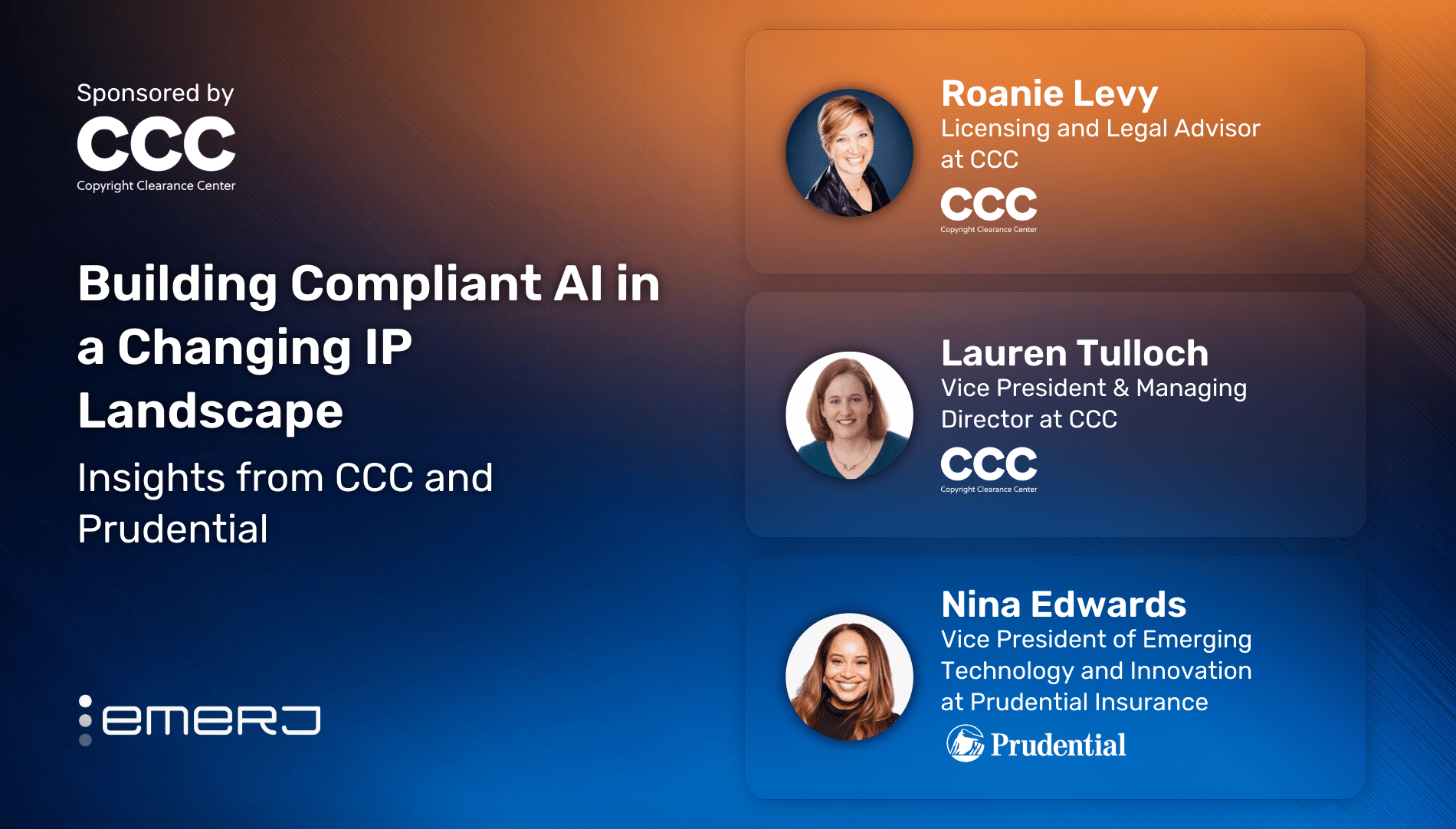
Together, the guests point to a clear set of actions that help align licensing with real AI use and keep outputs defensible:
- License the full AI lifecycle: ensure agreements cover pretraining, fine‑tuning, retrieval/embedding, automated summarization, derivative outputs, and both internal and external use.
- Build a rights matrix: maintain an enterprise catalog showing each content source, the AI uses it allows, and any downstream constraints such as embedding retention or output caching.
- Work with licensing partners: collaborate with aggregators and collective licensing organizations to secure standardized secondary rights and reduce one‑off negotiations.
- Implement provenance telemetry: log model versions, approved connectors, prompt artifacts, content‑source identifiers, and approval tickets so lineage can be validated in minutes.
- Strengthen output safeguards: use human‑in‑the‑loop review for external‑facing outputs; apply stricter safeguards to premium research, news wires, and proprietary datasets.
- Maintain an approved catalog with attestations: keep a registry of approved models, datasets, and connectors, including who approved them and the constraints under which they were approved; ensure vendor terms align with enterprise rights.
- Apply origin signals consistently: establish when watermarks or other provenance markers are required for customer‑facing outputs and published materials.
- Review and re‑validate regularly: refresh licensing, telemetry, and provenance controls as regulations evolve, and re‑check artifacts before promoting anything from demo to production.